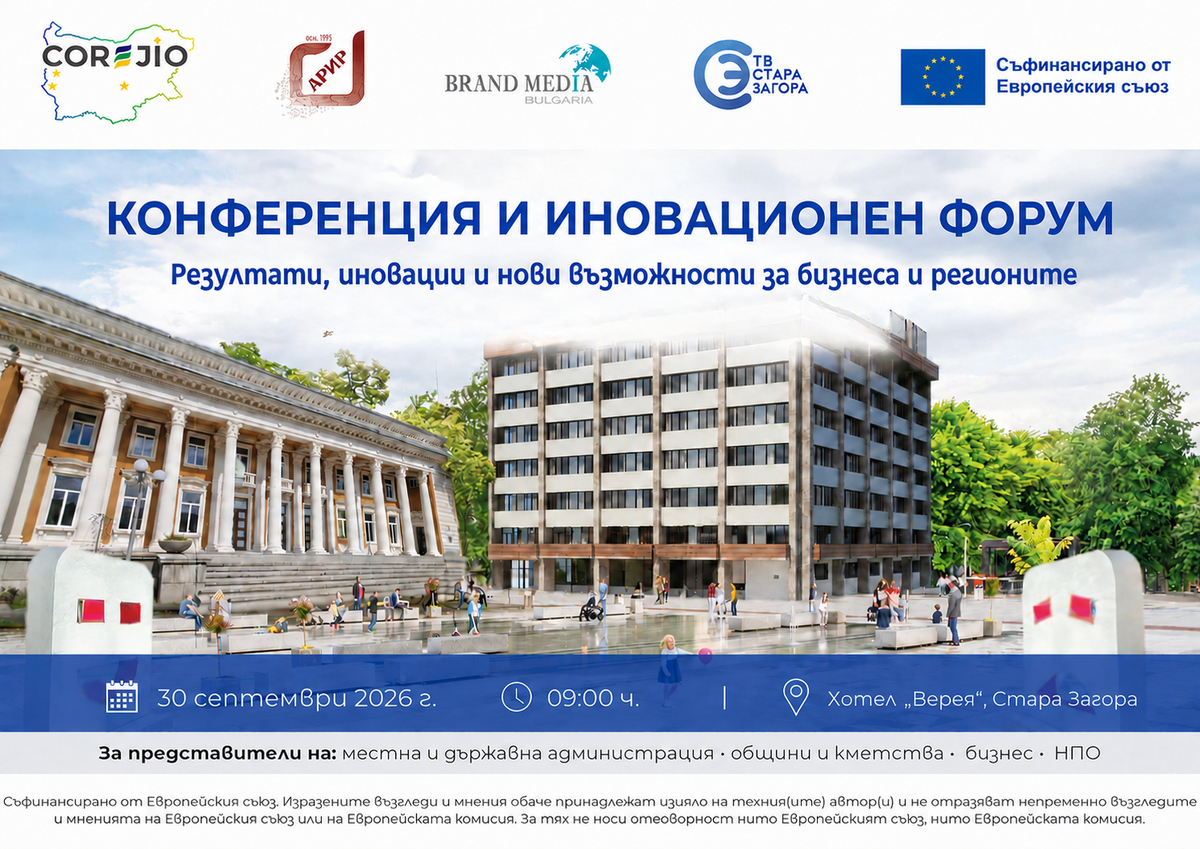
CONFERENCE AND INNOVATION FORUM – STARA ZAGORA, September 30, 2026
14/09/2026
From European experience to regional solutions: hydrogen mobility in the spotlight at a meeting in Stara Zagora
08/10/2026The €1.4 billion Just Transition fund is not merely another financial package for Bulgaria to "absorb." It represents an opportunity for Stara Zagora, Pernik, and Kyustendil to develop new economic activities before the phase-out of coal begins to translate into lost jobs, population decline, and a loss of industrial capacity. The most promising avenues lie in industrial parks, support for enterprises, new technologies, and a skilled workforce.
This was the main message of the conference and innovation forum "Cohesion policy in action: results, innovations and more opportunities for regions in transition", organized on September 30 in Stara Zagora by Regional Economic Development Agency - Stara Zagora.he forum is part of the initiative COREJIO - One cohesion policy: multiple regions in sync for a just transition, in which ARIR - Stara Zagora partners with TV Stara Zagora and Brand Media Bulgaria to raise awareness of European cohesion policy in coal regions.
Atanas Pekanov: The transition is an opportunity
The event was opened by the Regional Governor of Stara Zagora, Assoc. Prof. Dr. Kaloyan Damyanov, who pointed out at the very beginning that the just transition should not be viewed as a compensatory mechanism.
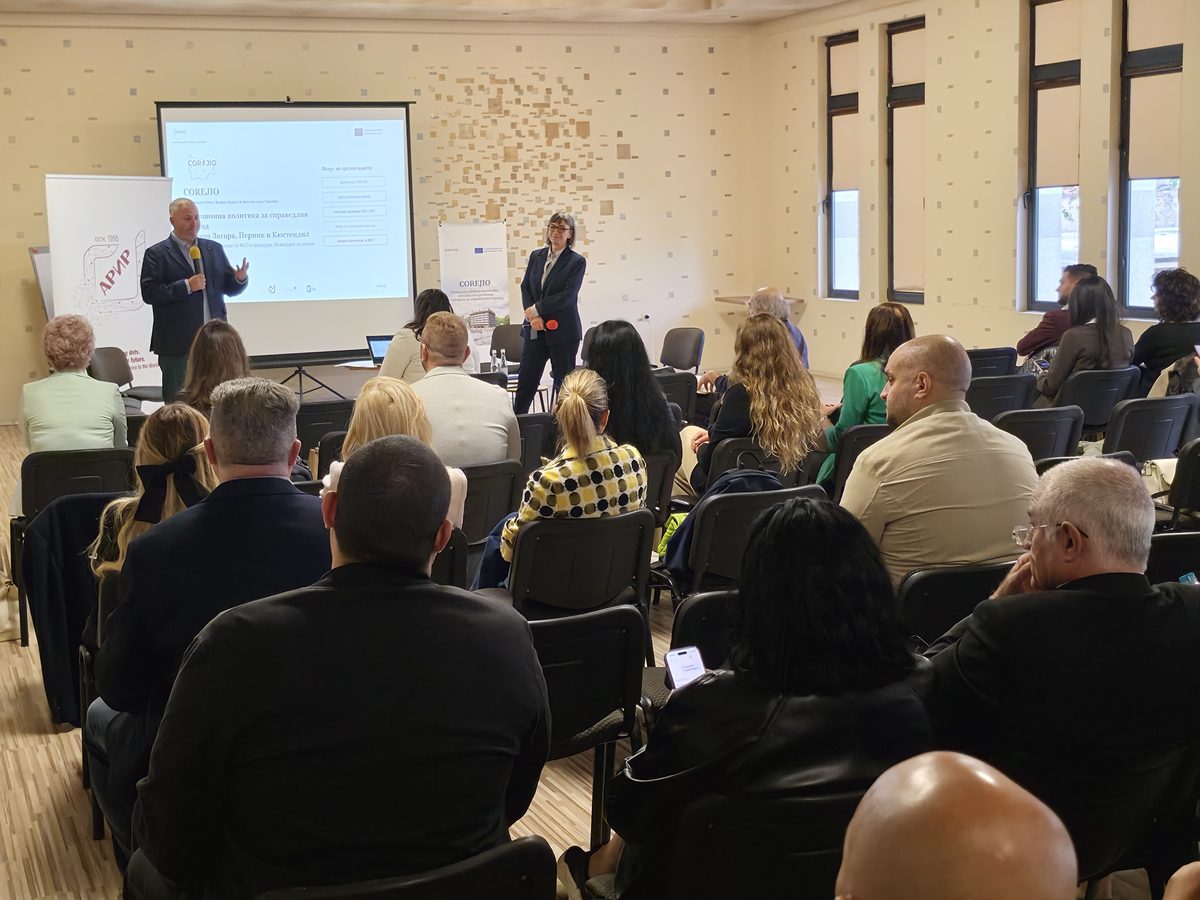
"It is crucial not to view the just transition merely as a compensatory tool," stated Kaloyan Damyanov. According to him, Stara Zagora should leverage European mechanisms to develop its existing industrial base and forge new partnerships.
Similar position holds Deputy Prime Minister Atanas Pekanov , who despite his busy schedule, addressed the conference guests via a video message.
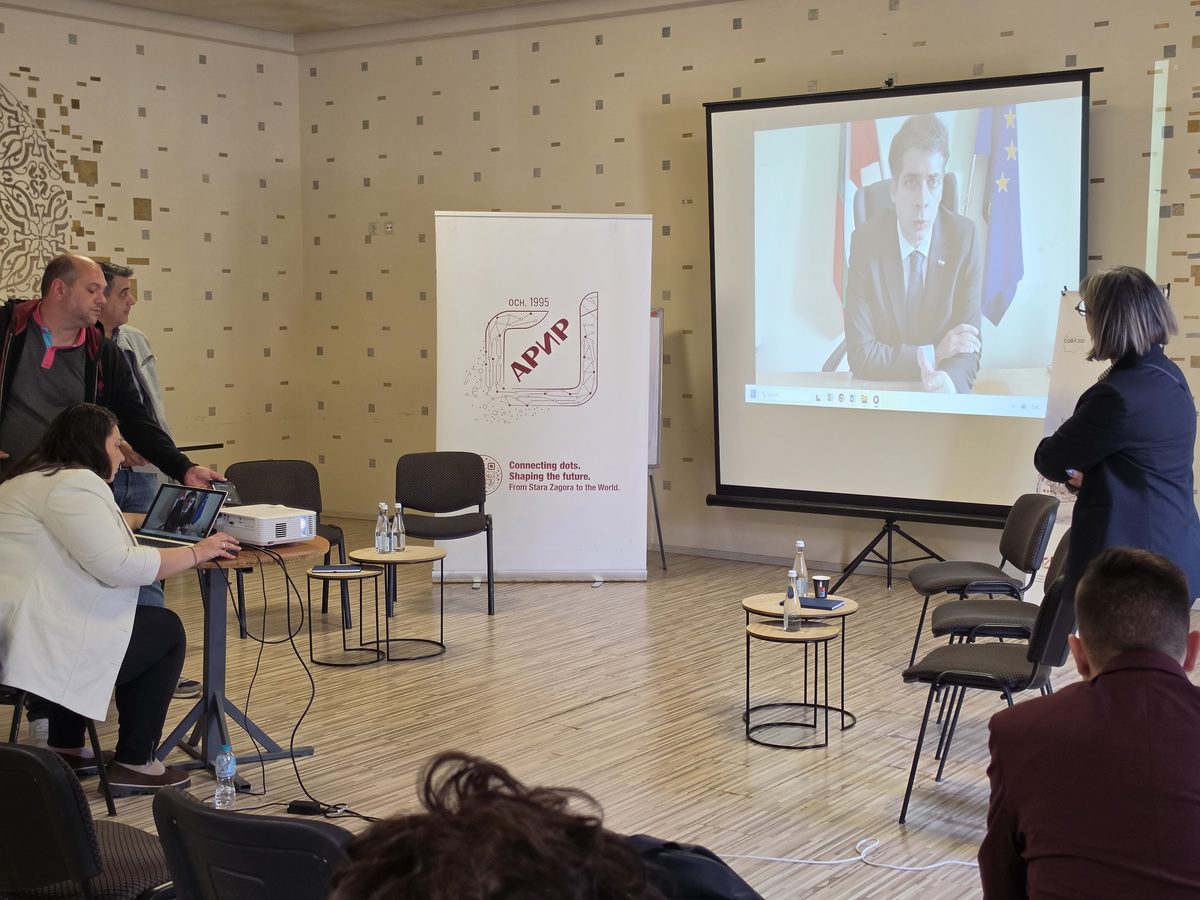
He identified the development of industrial parks, support for small and medium-sized enterprises, investment in new technologies, and the training and retraining of the workforce as the primary areas for the allocation of funds.
“We must view this word—‘transition’—as an opportunity to build something new,” said Pekanov.
According to him, the coal regions remain key for the Bulgarian economy because of the accumulated production traditions, the qualified personnel and the existing industrial base. It is on them that new economic activities related to low-carbon productions, technologies and innovations should be built.
What should be built using the €1.4 billion in resources?
Pekanov outlined four key areas, which are also defined in the action plan adopted by the government.
The first is the development of industrial parks featuring ready-to-use sites and established transport and technical infrastructure. Without such a foundation, regions struggle to attract new manufacturing enterprises, regardless of the amount of funding allocated under European programs.
The second area of focus is support for small and medium-sized enterprises. It is precisely these businesses that need to continue investing, modernizing their production, and creating jobs at a time when a large part of the local economy is facing uncertainty.
The third focus is new and innovative technologies, including low-carbon industries and sectors with long-term growth potential.
The fourth area of focus is human capital—specifically, the training and retraining of individuals whose professions will be affected by the transition. New enterprises alone are not enough if the regions lack a skilled workforce to staff them.
These four elements must be interconnected. An industrial park without investors is merely infrastructure. An investor without a skilled workforce struggles to develop production operations. Similarly, training programs without actual jobs fail to retain people in the region.
Therefore, success will not be measured solely by the percentage of funds utilized, but by the type of economy that remains after the programs conclude.
Four different numbers that should not be confused
Various figures regarding the "just transition" are frequently cited without clarification as to what exactly lies behind them. During the forum, Dr. Rumyana Grozeva, Executive Director of ARIR – Stara Zagora, presented specific figures and outlined the areas where European funds can facilitate a successful transition. She also cited examples of successfully completed projects that support the development of the three regions.
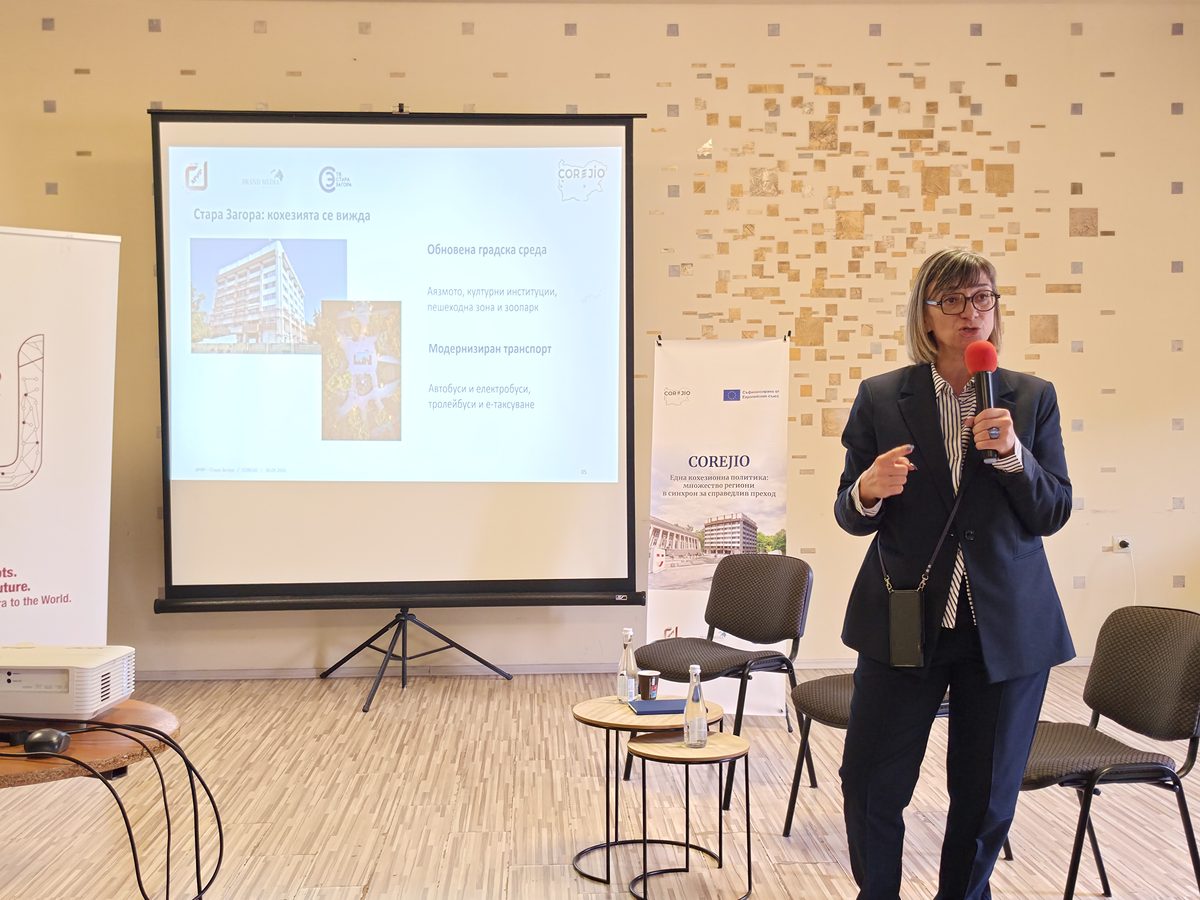
The data presented at the forum outline several distinct levels of funding:
- €1.4 billion is the total resource of the Just Transition Fund, aimed primarily at Stara Zagora, Pernik, and Kyustendil and their associated territories;
- €235.4 million is the volume of grant support presented for the Stara Zagora region under key European programmes for the 2021–2027 period;
- €16.4 million е публичната инвестиция в инфраструктурата на Индустриална зона „Загоре – Еленино“;
- over €225 million are the planned private investments of the enterprises that are being built in the zone.
These instruments are not interchangeable. They represent different stages of the same chain: European and national resources, public infrastructure and business support, attracted private capital, and finally—new jobs and economic activity.
It is precisely the last part of this chain that is the most important.
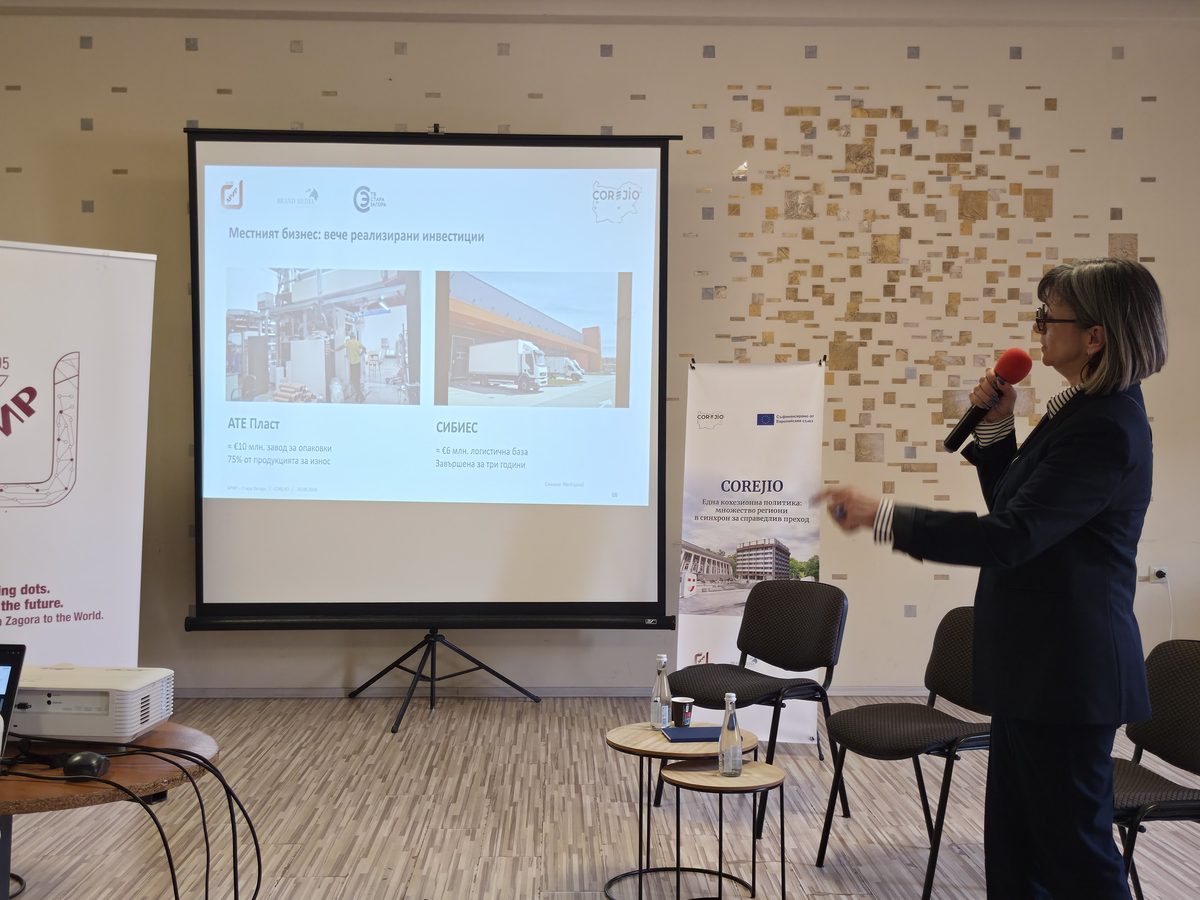
"Zagore – Elenino" demonstrates how public resources can attract private capital.
Seven enterprises are being built in the "Zagore – Elenino" Industrial Zone, with planned investments exceeding €225 million and the expectation of creating more than 2,000 jobs. Public funding amounting to €16.4 million has been allocated for the zone's infrastructure.
This means that the volume of planned private capital is nearly 14 times greater than the public investment in infrastructure. It is important to clarify that this concerns planned investments and projected employment, yet the example clearly illustrates the logic that should underpin a just transition.
The role of public funding is not necessarily to replace private capital. Its task is to create the conditions that make a territory attractive to investors—land, roads, communications, energy infrastructure, a skilled workforce, and functioning local institutions.
Committed funds do not mean a completed investment.
One of the most critical issues remains the pace of actual implementation. Dr. Grozeva noted that, as of mid-2026, approximately €616 million—or about 42% of the Just Transition resources—had been committed. The funds actually paid out amounted to around €118 million, or approximately 8%. By comparison, the average payment level for Cohesion Policy programs was about three times higher.
The difference is significant. Committed funds mean that projects have been selected and contracts signed. Actual disbursements indicate what portion of the projects is already underway and has incurred recognized costs. The economic impact, however, comes even later—once the infrastructure is completed, the machinery is operational, and the staff have been hired.
Therefore, accelerating the procedures is necessary but not sufficient. If the funds are spent without subsequent investment, productivity, and sustainable employment, a technically successful absorption rate will not signify a successful transition.
The rules change after 2027.
The second major topic of the forum was the proposed architecture of the European Union budget for the period 2028-2034.
The current proposal does not provide for a standalone Just Transition Fund modeled on the 2021–2027 framework. Support for territories undergoing transformation is expected to be integrated into the broader financial architecture. While the proposal remains subject to negotiation, its direction raises a key question: will the targeted territorial focus on regions where the transition is far from complete be maintained?
Dr. Rumyana Grozeva, Executive Director of ARIR – Stara Zagora, highlighted the difference between Cohesion Policy and competitiveness policy.
Cohesion policy is linked to specific territories. Its task is to reduce regional disparities, ensure access to opportunities, and support the long-term transformation of more vulnerable areas.
Funding for competitiveness targets innovation, leading-edge technologies, business growth, and projects with the potential for European and global market reach.
The two goals do not contradict each other, but they do not automatically lead to the same investments.
Competitiveness funding naturally gravitates toward locations where there is already a concentration of companies, specialists, research infrastructure, and a functioning ecosystem. Consequently, the most highly developed centers can continue to attract a large share of new investments.
For regions in transition, the question remains as to who will finance the preliminary work – the terrain, infrastructure, skills, scientific capacity and design readiness needed for them to participate in this competition.
Why does the new South District matter?
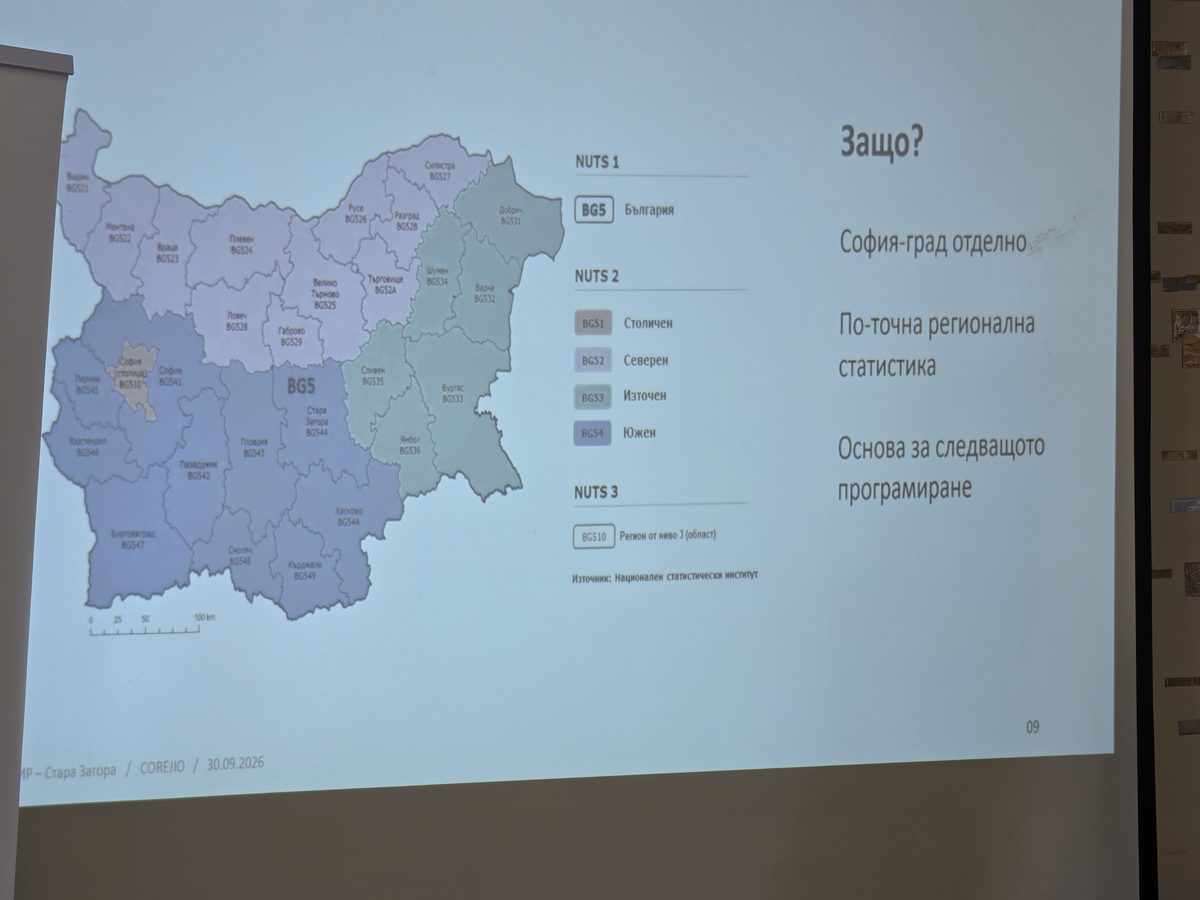
As of January 1, 2027, Bulgaria will transition from six to four NUTS 2 regions, which are used for statistical monitoring, planning, and the reporting of European funds. Stara Zagora, Pernik, and Kyustendil will be included in a single Southern region.
This does not entail an administrative merger of the regions, but it creates a common statistical and programmatic framework. It is precisely here that the risk arises that average figures for the larger area might mask significant disparities between the individual territories.
Stara Zagora is facing the transformation of Bulgaria’s largest coal-fired energy complex. Pernik and Kyustendil have different economic structures, scales of affected employment, and opportunities for diversification. A solid average figure for the entire Southern region does not automatically mean that each of the constituent districts is developing well.
Therefore, the specific needs of the three regions must be safeguarded during the programming phase for the next period. Once the rules and budgets have been finalized, the scope for making changes will be much more limited.
Bulgaria is a net recipient, but the question now is what remains after the funds.
The data presented at the forum illustrate the scale of European funding for Bulgaria. For the 2007–2025 period, the country received over €36.9 billion from the EU budget, while contributing approximately €10.5 billion. The net positive balance stands at approximately €26.4 billion.
For the 2021–2027 period alone, European funding for the green and digital transition and territorial transformation amounts to €10.7 billion, and with national co-financing, the total value reaches €12.9 billion.
In Stara Zagora, visible results include revitalized urban and park environments, cultural institutions, and pedestrian areas, as well as the modernization of public transport through new buses, trolleybuses, and electric taxis.
The next stage, however, sets the bar higher. It is not enough to simply account for the funds invested; one must measure whether they have led to new jobs, higher productivity, subsequent private investment, and the region's ability to retain young and skilled people.
Technologies must reach the real economy.
The forum also showcased some of the technological potential upon which Stara Zagora can build.
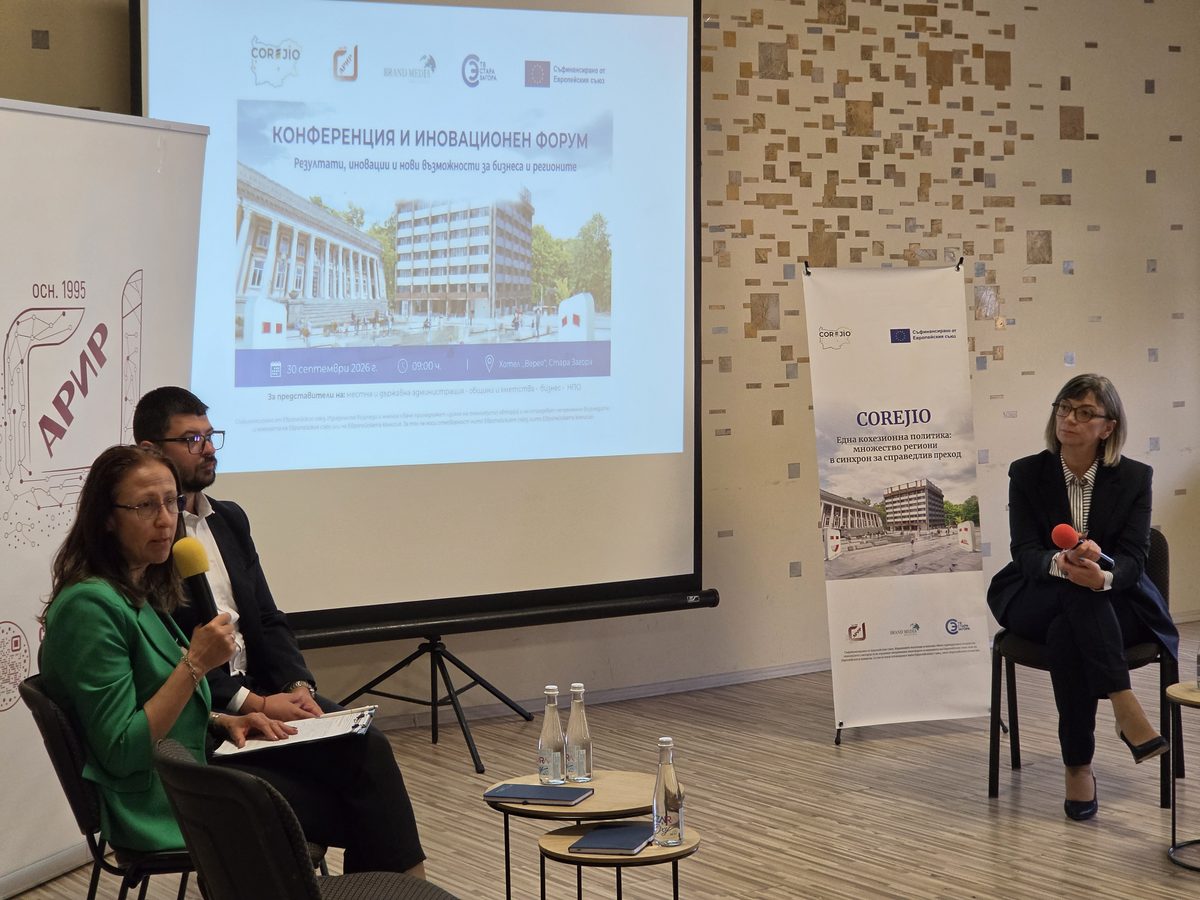
H2START—Trakia University’s Center of Excellence in Hydrogen Technologies—develops solutions for hydrogen production, storage, transport, and utilization. The aim is for research activities to progress from prototypes and demonstration projects to concrete industrial applications.
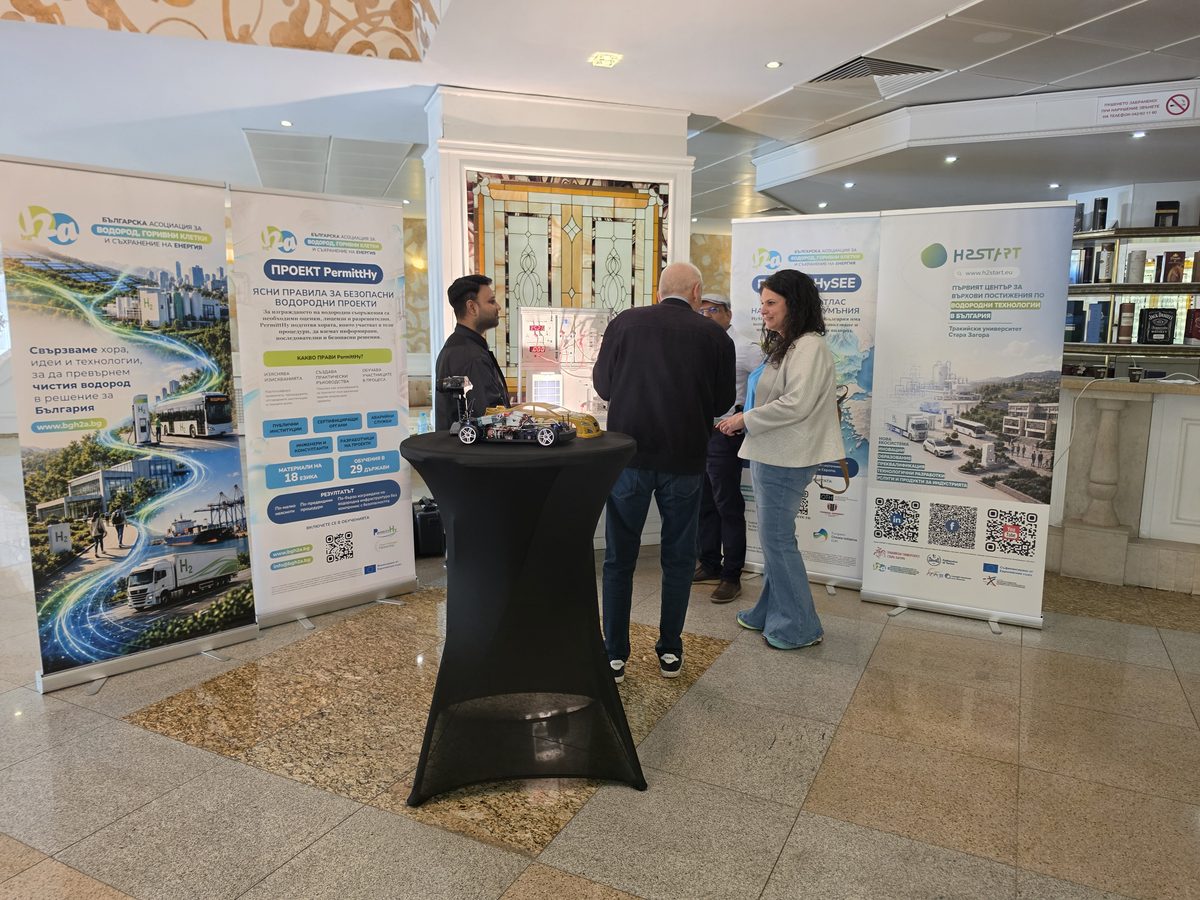
Among the options under discussion is the hydrogen-electric retrofitting of existing rolling stock, including as a future concept for the Septemvri–Dobrinishte narrow-gauge railway. At this stage, this is not an approved investment project, but rather an example of a potential application of the technology.
European Digital Innovation Hub "Zagore" for its part offers enterprises and public organizations opportunities to test technologies before investing, as well as access to specialized infrastructure and expertise, training, and support for digital transformation. Key areas of focus include artificial intelligence, high-performance computing, robotics, virtual reality, and cybersecurity.
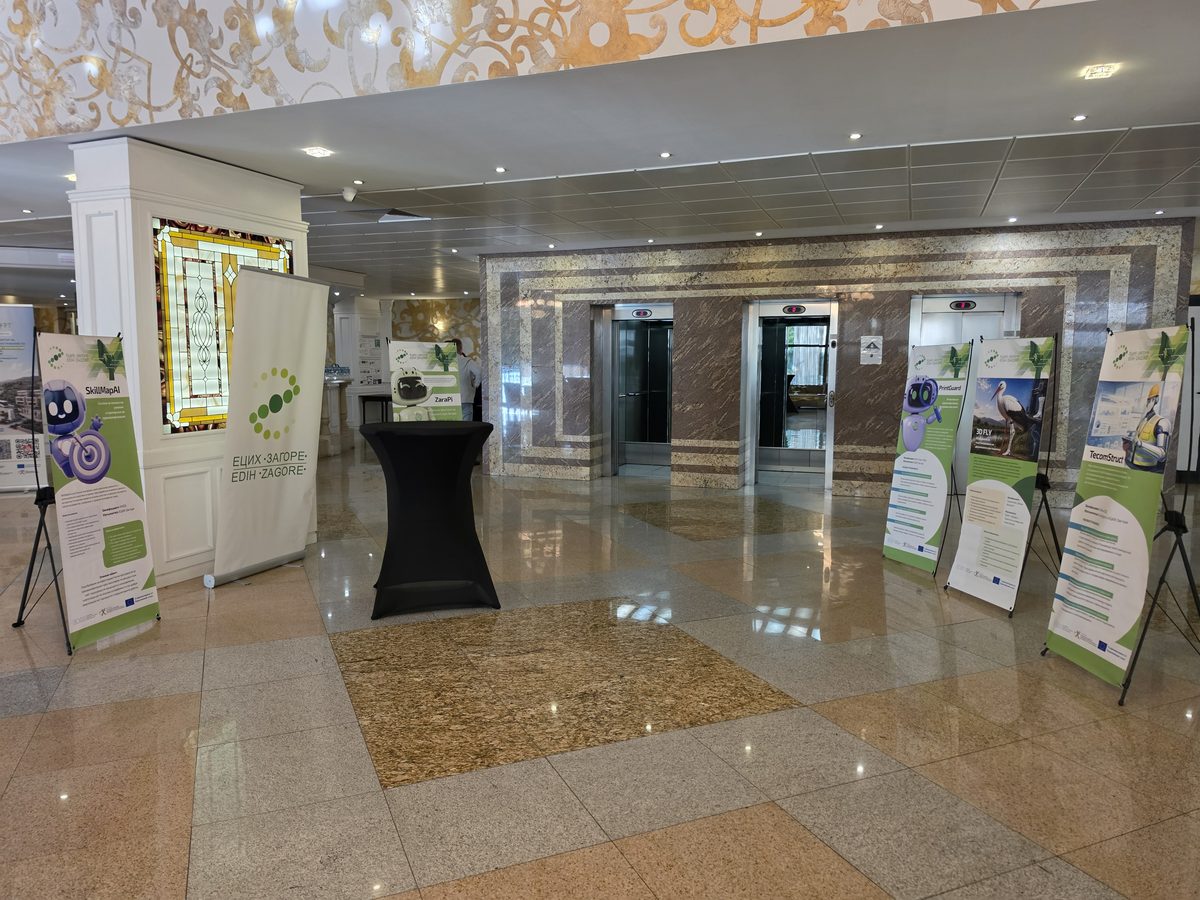
Precisely these kinds of links between science, technological infrastructure, and enterprises are necessary if the region wants to attract higher value-added manufacturing.
The real test lies ahead.
The messages conveyed by Atanas Pekanov and Assoc. Prof. Kaloyan Damyanov outlined a shared position: the just transition should not manage the decline of coal regions but rather lay the foundation for the next stage of their development.
Success will depend on several practical conditions: ready-to-use industrial sites, functioning infrastructure, prepared projects, access to finance for small and medium-sized enterprises, new technologies, and a workforce with the necessary skills.
The seven enterprises, the planned investments exceeding €225 million, and the more than 2,000 anticipated jobs at "Zagore – Elenino" offer a glimpse of what this model could look like. The challenge lies in ensuring that such results do not remain isolated examples but instead evolve into a comprehensive economic direction for Stara Zagora, Pernik, and Kyustendil.
The Media and Cohesion Policy
The national media still do not have sufficient capacity for in-depth coverage of the cohesion policy and the way in which European funding affects the development of individual regions. This was commented by the editor-in-chief of Economic.bg, Georgi Zhelyazkov, during a panel specifically dedicated to the role of the media in the context of cohesion policy.
According to him, regional media in Stara Zagora, Pernik, and Kyustendil are significantly more engaged with topics related to cohesion policy, whereas at the national level, these issues often remain off the regular media agenda.
If you even follow the economic media, everything is on the surface - there is no depth," Zhelyazkov pointed out.
According to him, this is also relevant to understanding the various challenges facing coal-dependent regions. Stara Zagora, Pernik, and Kyustendil should not automatically be lumped together, as their economic structures and the consequences of the transition differ. Zhelyazkov also highlighted the need for greater accessibility of information regarding European programs. Within the framework of the COREJIO project a specialized information platform has been created regarding the topic, which has already garnered tens of thousands of visits and is set to be enhanced with additional features for searching and filtering information.
During the discussion, regional media representatives also emphasized the need to showcase European funding through tangible results—what has actually been built, transformed, or created—rather than focusing solely on the size of the budgets allocated to individual programs. Zhelyazko Dinev from Stara Zagora Television expressed a willingness to launch a dedicated segment focused on European funding, following a proposal by Dr. Rumyana Grozeva.
Veni Petrova, Head of the Public Relations and Protocol Department at Stara Zagora Municipality, also took part in the discussion. She emphasized that institutional information alone is not sufficient for effective communication. It is the media that plays the role of translating this information into accessible language, incorporating diverse perspectives, and building trust—particularly in regions where economic transformation is creating social uncertainty.
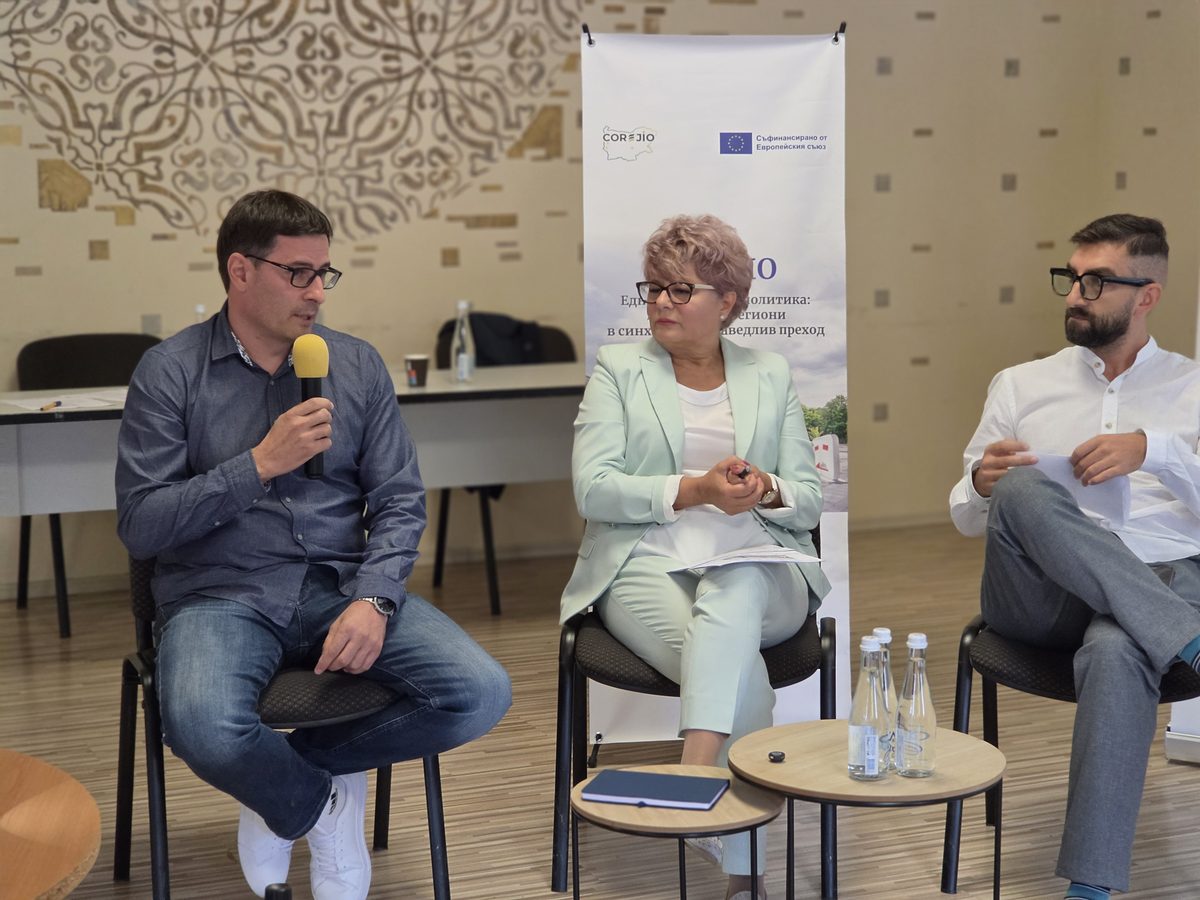
The forum marked the conclusion of the COREJIO project—"One Cohesion Policy: Multiple Regions in Sync for a Just Transition"—implemented over the past year by ARIR Stara Zagora, Brand Media Bulgaria, and Stara Zagora TV. Its aim was to raise awareness regarding the opportunities offered by EU cohesion policy in coal-mining regions. The project produced a series of short films and numerous information materials, as well as the "EuroPari 101" platform and Practical Handbook for Journalists, Editors, and Communications experts.The goal is to present information on European funding not merely in terms of budgets and administrative procedures, but through tangible results and their impact on the lives and economies of the regions.
Co-funded by the European Union. The views and opinions expressed are solely those of the authors and do not necessarily reflect the views and opinions of the European Union or the European Commission. Neither the European Union nor the European Commission can be held responsible for them.