

Project name: SpurUP
Bridging the Peri-Urban Divide
PROJECT SUMMARY
The SpurUP project brings together 34 partners from 11 EU countries, including universities and research institutions, technology providers, local authorities, industries and NGOs.
This diverse and experienced team will work together to create resilient, climate-neutral peri-urban regions that enhance the sustainability and well-being of communities, addressing the challenges under the domains of industry and governance.
Peri-urban areas, characterized by their blend of urban and rural features, are located at the rural–urban fringe, the transitional zone where urban and rural landscapes meet. These areas are often overlooked in traditional planning. These regions are under pressure from urban sprawl, industrial pollution, and complex land-use conflicts. SpurUP (Sustainable Peri-Urban framework for Climate Neutral development) is a Horizon Europe initiative designed to give peri-urban areas a clear voice and a sustainable future.
Aim of the Project:
The project SpurUP aims to transform the transitional zones between city and country into hubs of climate-neutral innovation and social equity
Peri-urban areas are the “lungs” and “engines” of our cities, yet they face fragmented governance and intense industrial pressure. SpurUP provides the tools to manage this growth without sacrificing the environment.
SpurUP SpurUP aims to integrate net-zero technologies and foster participatory governance to tackle environmental pressures and fragmented governance in these regions. The project will establish Local Green Deals (LGDs) to unite public and private sectors in reducing greenhouse gas (GHG) emissions, improving energy efficiency, and promoting social equity and sustainability.
Focus Areas
Focus Area 1: Industrial Pressure & Environmental Health
High GHG emissions and inefficient resource use in the peri-urban areas create a significant ecological footprint that hinders climate targets.
Focus Area 2: Fragmented Governance
Peri-urban areas typically fall under overlapping administrative jurisdictions. This leads to inconsistent policymaking, land-use policies and inefficient resource allocation.
Focus Area 3: The Resource & Infrastructure Deficit
Financial and technical barriers prevent local authorities from implementing large-scale climate actions, such as decarbonizing industries or managing waste.
Focus Area 4: Social and Environmental Vulnerabilities
Marginalized populations require inclusive and adaptable strategies to address local socioeconomic needs. The lack of integrated governance and infrastructure further exacerbates these vulnerabilities.
Our Pillars of impact:
- Decarbonization
Deploying solar thermal and carbon capture technologies to slash industrial emissions. - Circular Economy
Turning industrial waste into shared resources - Smart Governance
Deploying solar thermal and carbon capture technologies to slash industrial emissions.
The Methodology
SpurUP operates through a rigorous, three-phase strategy that doesn’t just deliver technology; it builds an ecosystem where research, real-world testing, and community feedback drive every decision.
- PHASE 1
Foundation, Research & Co-Creation
Before a single tool is deployed, SpurUP partners listen. During this phase, a deep-dive research will be conducted into the specific social and local needs of each peri-urban region. - PHASE 2
Development & Real-World Implementation
With the groundwork laid, SpurUP will move into the implementation of digital and technical solutions within the project’s 3 Living Labs. - PHASE 3
Evaluation, Fine-Tuning & Replication
The final phase is about proving scalability, finalizing a toolkit based on the real-world performance data and end-user opinions gathered in Phase 2.
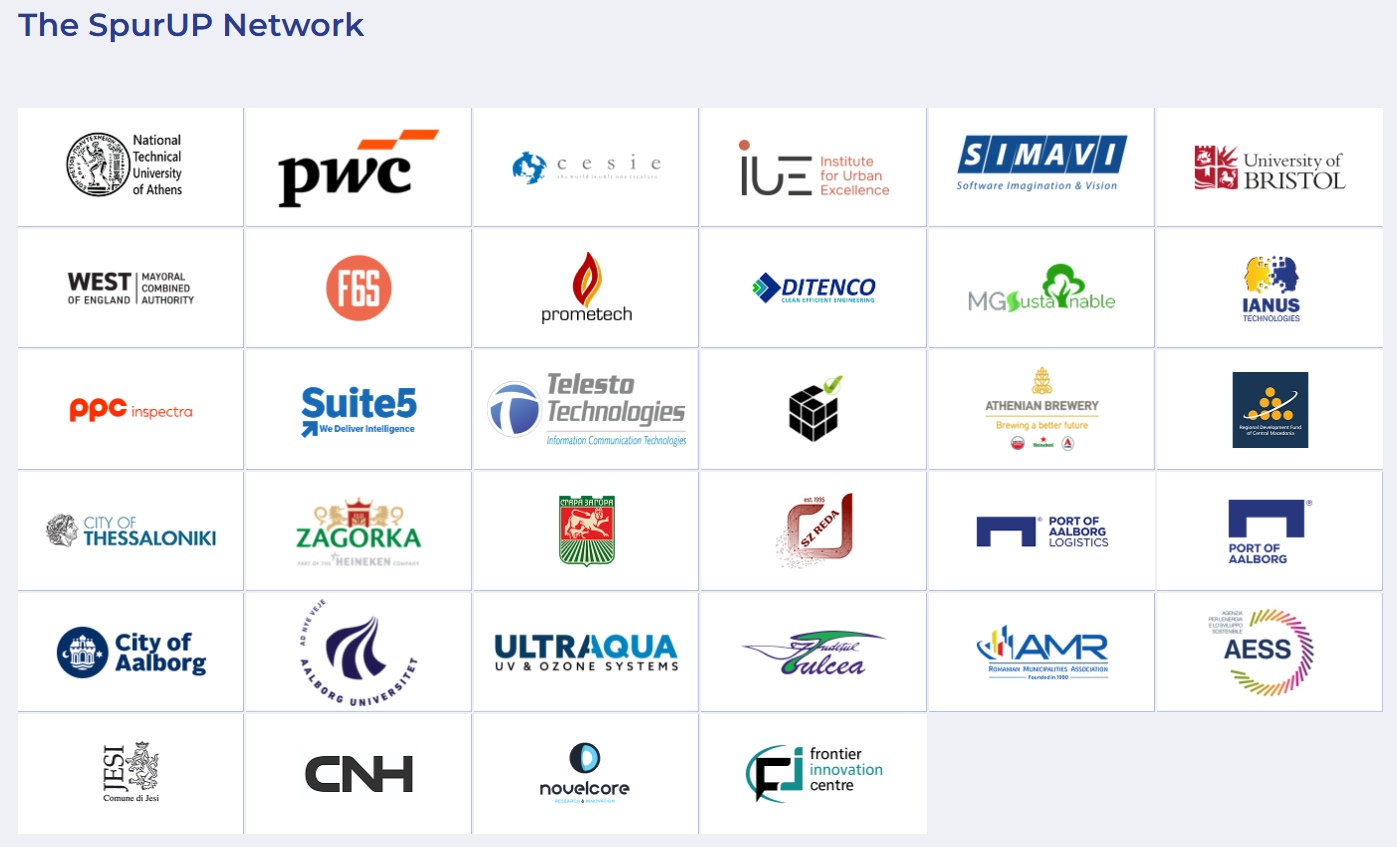
The SpurUP Network
- 34 Partners
- 11 EU Countries
- 3 Living Labs (Thessaloniki, Aalborg, Jesi)
- 3 Replication Sites (Stara Zagora, Tulcea, Avonmouth Severnside)
Duration of the project: January 2026 - April 2029